MISSION - keeganrs@gmail.com

My blog is about my dream for a world where everyone is allowed to exist and improving the quality of life of the world’s citizens is our priority.

For many reasons I reject the current path of the world.

Rich world insanity, excess and lies. Poor world denial of human rights and food. The destruction of the planet. Our homogenisation into one consuming mass of idiots.

We need to look for new ways. New human interactions at every level. New models of participation or at least rescuing old ones. Things like couchsurfing.com and woolf.org are steps in this direction as are the models of health and education being created and implemented in Venezuela.

We need to stand up and say "Enough!" to the current regimes and look to support all those initiatives for a better world and create our own. 

Friday, 16 March 2007

Buried dead or alive!

Today I visited the mines of Potosi. It's a well known tourist attraction which over the years as more people make there way to Bolivia becomes more organised and somewhat sterile. That said I don't think what I did today would be permitted in too many places in the world. Scaling ladders and ducking through a maze of 1.5m tunnels over 5 different levels. My tour-guide a miner from the age of 12, a 3rd generation miner brought this inanimate mountain to life.

A little history: the silver was discovered in the 1540's by an indigenous guy who was meant to report his findings back to the Spanish conquistadors who were spreading there ways and taking what they could from there newly found treasure trove (Latin America). It was a secret for 2 years before falling out with a friend who went and told the Spanish. They immediately put the indigenous people to work along with African slaves brought specially to work. The conditions described were 24-36 hour shifts. Many workers didn't last 6 months in the conditions of high altitude, heavy labour, new diseases and terrible living conditions away from the mine. It is estimated that there were 200 000 people living in Potosi in the 17th century making it the biggest city in the world ahead of modern-day monsters London and Madrid. (Funnily enough the population here has remained at around the same number.)

In modern times the history involves a worker revolt in 1952 against private owners which was a blood bath. There are reports of the army tying workers together and using the same dynamite used to liberate the Silver and Zinc of the mountain to end the lives of those calling for better pay and better conditions. The blood shed did bring about the changes that the workers called for, the mine was nationalised and workers started to have the benefits of a regular wage, life insurance (10 years was the average working period in these times before death or illness forced a change) and health insurance. This lasted until 1985 when a crash in silver prices lead to a crises in the mine. The result was a new structure of co-operatives. The idea was that whatever could be gained would be shared but unfortunately this didn't come true resulting in the current situation.

Workers today in the mine are allotted a part of the mine to work in by there co-operative owner. The owner may have up to 20 different areas each of which will be delegated to a "second-hand" the second hand is the one that works! The second hand then has the obligation of bringing 8 tonnes of raw material to the surface to be processed each week. They may decide to bring assistants on board with them, usually 2 to 4, which will bring the expected yield up by 8 tonnes per person. Each tonne on average contains 50grams of silver which at market price now (which is up currently) is worth $18. This works out to around $560 per month per 8 tonnes (or per worker) if all goes to plan. The helpers who are the hardest workers with least experience can expect to gain around $80, the second hand $240 and the owner of the co-operative $240. When you multiply that out the second hand gets around $800 (with 2 other workers) and the owner makes $800 from this section, if they have 20 areas they make $16 000. I met some of the owners at the top drinking beer hanging around to make sure the workers are working hard!

The difference in wage is massive. The workers are likely to suffer all sorts of injuries and illness for $80 while the owners rest for $16 000. If the miners are unlucky and don't find any silver for a week they get nothing! 5 and a half days a week doing 10 hour days which sometimes doesn't pay! Needless to say there is a lot of animosity between the workers and owners. Some bosses pay a little if they don't come out with any silver others call there workers lazy.

There are no engineers to tell them what they can blow up and can't which resulted in a collapse last week and is apparently common in the wet season. Those who have been working in the mine the longest are those considered educated to make the big decisions. To add to this workers have to pay for all there own equipment including dynamite, helmets, lights, tools, coca, cigarettes and alcohol. Part of the deal with the tour is to pay a little to the tour guide and bring with you some coca leaves, alcohol and cigarettes for the workers and to bless there gods. Ancient tradition is still a big part of the underground culture where Quechua is the most spoken language (in contrast to the Castillano, a dialect from Spain which is spoken in the city of Potosi) and gifts of the above substances and annually a sacrifice of Llama blood are given to appease their gods. They pray to this god for luck finding there fortune in the mountain and to the Christian god for health and more spiritual rewards. This is a shift that has come over time.

For the workers here they are stuck. Most started working here in there early teens and don't know anything else. They are a part of the culture and they dream only of progressing up the chain to a second-hand or owner in the time they have in the mine. They pray every day to the land and their gods that it won't be there last. For my guide Willie he got out of the mine after his father and grandfather fell victims to lung cancer caused by the silicon and arsenic in the air in the mine the most common way to die slowly in the mine. He has learnt English and started the company that I visited through and he plans for his children to study for a different life which seems to be the best thing the miners can hope for. Most of this generation of 18 000 workers already trapped in the mine.

In the next part I will explain some of the discrimination of the past and a more general picture of Bolivia as well as the role of coca in Latin America..

Thursday, 1 February 2007

Chavista?


"Are you a Chavista" is something I have been asked a few times in the last few days. It means "Are you in support of Chavez?" There are people in the street with his red shirts saying things like, "10 million votes against imperialism." If you are wearing a red shirt or a red hat it's a symbol of supporting Chavez here. This is the way that the people speak and represent their political persuasions in Venezuela. Everybody knows if there friends and family are with him or against him and some even have parted ways because of it. To answer this question I really need to think about how far along an ideological path I am.

I have been thinking about politics a lot for the last year or two and have always had thoughts about the way things are but they have never really been any kind of subscription, never as part of a group. I have got to a point of being quite sure about our destructive path and lack of world leadership. I believe in change but the question is down what path. To me Chavez represents hope for a region destroyed economically by IMF and World Bank policies and politically by foreign interventions against democratically elected governments and other meddling mostly by the US since the second world war under the Munroe Doctrine. When people hear this they think I´m a fanatic in supporting him but really I just think that he gives a hope for economic independence from the US by forming alliances and perhaps even a monetary fund outside their (direct) influence. Does this mean that I love Chavez?

I think to get out from under the US's economic pressures is a good thing. In that I support Chavez and I hope that the links he is creating with the other governments of the region, such as to exchange oil for doctors and other professionals with Cuba, are fruitful for all parties involved. The examples of open markets versus protected markets, South East Asia vs Latin America suggest that greater protectionism is needed from free market pressures enforced for funding by the world bank and in the free trade agreements that the US is in the process of negotiating or has just completed with the majority of countries in Latin America. Chavez speaks out against these agreements as history shows for Mexico it was a disaster and other markets that were "opened" after the fall of the Communist block also saw very hard times. In Russia poverty rose from 2% to over 20% coming out of their oppressive communist regime. I agree with this stance.

He quoted Noam Chomsky´s book "Hegemony or Survival" and called Bush the devil. I agree with this in some ways. The world does need to speak out against tyrant leaders of which Bush is surely one and Noam Chomsky is someone that everyone who cares to know about the world should read. These actions however really pushed away those not in support of him even further by being so extreme and outspoken. He does say what he wants and speaks out about many things on a daily basis here in Venezuela. So maybe I do love Chavez?

The next thing is to look at spending. He talks about helping the poor by getting them cheaper food, more access to cheap housing, free education, free health care and employment. It seems from most statistics that I have seen and people I have spoken to that he is making some changes in all these departments. The main criticisms in this area are that by providing for people he is taking away the incentive to work and that he really needs to invest in big business and the rest will follow. I'm definitely with Chavez on this one, people should be provided with these basic rights as a first priority and that is the function of government to strive to provide them to the highest level through economy. The argument of a disincentive to work doesn't come true when you look at the welfare states of Europe who provide much more for free (at least for now) than Chavez can.

Military spending? I don't know the numbers but he is definitely growing his army with a target of 1 million soldiers and using free education plus pay as an incentive to join. He is also acquiring weapons mostly from Russia (most of the world are buying them from Israel and the US - big business). I don't agree with military on the whole but with the coup against him in 2002 and the US history of military interventions against governments that oppose there economic or ideological goals he could make a case that it's necessary. I really don't like this reality.

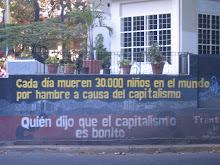
Advertising and propaganda! Chavez and slogans supporting his government are on every wall in the city. You can see slogans about capitalism and about freeing Palestine paid for by government funds. In someways it's a good thing to get people thinking about things like Palestine but Chavez is really investing a lot of money to get his face and words everywhere he can. In the current war of publicity he faces against the world media telling his people everything he is doing is bad he does need to try to keep people loyal but I think if I lived here it would bother me seeing him so much.

So I guess from all that I have said it looks like I will be putting his poster up on my wall! In fact though what this has all really taught me is that politics shouldn't be about making heroes or demons from politicians. This goes for "the devil - Mr Danger - Bush" and Jugo Chavez they should both by individual policies and the merit of each rather than the ideology they represent. What actions their governments take should each be judged on there merits rather than creating cults of blind support or hate. Another thought I have had to go along with this is that individual policies and changes are really what a government is about.

It seems obvious that each policy is important to what legacy a government will leave but really if that is what government is about how does our democracy function. We don't have any say in policy making! We can say something every 3-7 years depending on which democracy we are a part of but in between there is little that can be done about how your country is running. Many big decisions such as going to war or privatizations are made without public consensus. This is not what the Athenian's intended for the democratic system as far as I know. They had a meeting of all men who would be required to fight a war where they would all be allowed to make statements for or against and about how the war would be carried out. Of course there were some popular voices who swayed opinion but the did require a consensus and allow input. We don't have that! In Switzerland they have referendums on big decisions every few months which requires people to take more of an interest in the decisions that there government although some seem to abuse this privilege by just towing the media line according to my friend from there.

What does this all mean about Chavez and Bush and Howard (Australian Prime Minister). It means that loving or hating your leader really isn't what politics is about. It's about making decisions to make the life better for the people that live in area being governed. I also think that we need to make a move away from governments with immunity to make big decisions about war and economy, which will affect many people both in the country they are made and abroad, to a system where what people want is reflected in policy.

From my travels I see that people want Peace, Environmental reform (people with more education value this more than those without generally) and welfare (food, housing, health, education etc.) The direction of neo-liberal regimes is away from all these goals according to all evidence in privatisation and war! Democracy ?!

So for now I'm with the ideas of Chavez but really I don't love him more than I hate Bush. I think they would both be good to have a beer with if there was no politics involved. Policies not personalities, participation not isolation from decision making.

Monday, 29 January 2007

Venezuela - Freedom from Imperialism or Totalitarian prison?

I came to Venezuela excited to see what it was really like in the land of Hugo Chavez and his self-proclaimed 21st century socialism. His mandate is to help the poor by delivering education, health care, affordable housing and work to the majority. His methods include freeing the country from ¨imperialist control¨ and creating a Bolivarian revolution uniting people across Latin America and indeed with anyone who shares his anti-imperialist goals. Chavez´s closest allies are Cuba and Bolivia who have socialist regimes. He has also recently been joined in this alliance by Daniel Ortega (Nicaraguan President who was in power during the CIA backed contra war from 1980-1990. He was acclaimed by unicef for astounding advances in health, nutrition and education before being attacked by the US for the threat that an alternative economy to Capitalism posed to US domination of Central America and the Munroe Doctrine. This provoked the first war on terror called for by Reagan.) and Rafael Correa of Ecuador. Other leftist governments of Latin America include Brazil, Chile and Uruguay although they aren´t a part of the Bolivarian Revolution. This movement is about nationalising industry and moving out from under the thumb of the United States ¨free trade¨agreements as well as the power of the World Bank and IMF. The nationalising of oil, gas and mineral reserves poses a problem to big business as it decreases there profits. For this reason these regimes have faces and continue to face big opposition from world media (inherently tied to big business) and the US government.

On the way to my first location Merida which took 10 hours to get to from the border including a few bus changes and immigration I was checked 3 times by army forces. In Colombia a strict military state I only had my bags checked at the airport, I suppose that it is to be expected with the reputation of Colombia being that everyone going there is going for the Cocaine and everyone leaving there is carrying it!

So as the soldiers went through my bag for the 3rd time I wasn´t really too bothered by the experience other than the prospect of the bus leaving without me making my passage void and leaving me with the army guys. They picked through my things for half an hour looking at all my family photos and asking to see all the money that I was carrying which isn´t much. I think they were more bored than in search of drugs but there manner was military firm which took away from the experience a little.

I have since been told that the Venezuelan military is bigger than that of Colombia at around 800 000. Chavez has set a goal of having 1 million people with military training, something for which he has been criticised heavily. In isolation I don´t agree with militarisation but with the amount of foreign business opposition he faces and CIA backed the military coup he has already survived it´s easy to see why he would want this force. It is written in there constitution that the force cannot attack another nation only defend it´s own sovereignty although I suspect the US operates under the same guise. From the military people I have spoken to so far it´s biggest draw seems to be the free education and reasonable tax free wage it offers. So far I have spoken to a guy who wants to be a mechanic who is also taking classes in Geography and Maths and a girl who is studying maths and wants to be a teacher. The time requirement of 2 years means that it´s feasible to enter to get the qualification you desire and leave. Both people that I spoke to hadn´t really thought a lot about war and don´t consider it a possibility. Education is an important part of development and seems to be a valued part of government policy with rising literacy rates and new tertiary education possibilities. Tying education to military is not ideal but it´s a decision many people make to allow full-time study with a living wage. As far as I know this only exists in a few countries in Europe and Cuba. In Australia you get some money if you meet criteria but I don´t know anyone who was able to live off this wage alone.

But what do they think about Chavez!?
First impressions came from the graffiti. Something that I have been observant of throughout the Latin American leg of my trip. The overwhelming majority of graffiti is in support of the government. Some of the pictures and slogans of Chavez (of which there are hundreds in each city) have been defaced but many remain perfectly intact, opposition murals on the other hand are invariably defaced and very few freestyle drawings in opposition paint the towns. This is in contrast to Mexico and Colombia where there was nothing in favour of the current regimes and very strong opposition offered. This method of expression which doesn´t involve media giants represents the views of the young and the lower or middle class (very rare to see a business man with a spray can but not so uncommon at a newspaper office). It looks like the young and the middle class are in support of Chavez! The main government murals gloat about the 10 million votes Chavez received in the recent election, slogans about delivering socialism and cutting imperialist ties and the Bolivarian people´s revolution in Latin America.

The people?
A trumpet player who loves to eat until he can´t fit anymore but is proud to only support a mild pot belly is not happy with Chavez because when he goes to Spain or the US his money isn´t worth much (can´t buy that extra desert) and because he has to save for a few years to buy a car.

A language professor, Rafaela who doesn´t like Chavez but thinks that he is helping the poor. She didn´t have strong opinions about whether he would damage big business but was concerned about the possibility.

Panadoria owner selling delicious fried empenadas who was convinced that war will be upon Venezuela within 2 or 3 years because Chavez is a bad man. Maybe because of ties with Iran or maybe because he is antagonising the US. (He called Bush the devil and frequently speaks out about the damage that there regime causes across the world including there terrorism of Iraq and the majority of Central America.)

Tourism student from Valencia who thinks that the poor will be lazy if they are given social support such as housing food and health care taking away the incentive to work! Her parents are both university professors but still they can only afford a comfortable life in Venezuela and not travelling the globe like me. I can understand the desire to be like the west but I didn´t get how helping the poor was a bad thing to do with the countries oil money. Her statements about corruption and pollution blamed on the current regime seem to suggest the country was a world leader before Chavez came to power although I can´t find anything to support this image. She fears the US will stop buying there oil and then the country will collapse. This could be the case however I think oil scarcity and the OPEC alliance make this difficult - anyone who knows more about this possibility I would love to hear from!

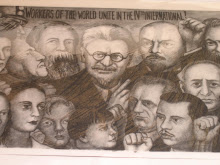
Oil management worker and tourism student daughter are communists. They are atheist and support Chavez all the way. They have a lot of government distributed literature about the nature of the Imperialist influence with references from authors such as Joseph Stieglitz (Globalisation and it´s Discontents and another book about the World Bank´s role in the Argentinian collapse of 2002 i think) and Noam Chomsky (Hegemony or Survival, Failed State) and other books about the man himself. Also they had Trotsky (A Communist who was a party member in Lenin´s government and wrote a lot in opposition to Starlin, I went to his house in exile in Mexico city!) and Simon Bolivar (most important Venezuelan in history famous for liberating Venezuela, Colombia, Ecuador and Panama who believed in a united Latin America and wrote a lot of documents still held in high esteem in South America). People in there street celebrated when as part of my introduction was that I believe Chavez and his anti-imperialist alliance give hope to Latin America and maybe the world. (Experts tell me these regimes have come and gone in the past with little impact on the big boss, the US)

Hot dog vendor from Valencia that has a sister living in Miami illegally as of 4 years ago. He thinks that Chavez is helping the poor but that he wants to turn the country into Cuba with heavy political repression and no opposition. He wants the freedom to drink in the street and enjoy the parties that Venezuelan´s love. I feel like these fears are as yet unfounded given the 12 consecutive democratic elections that Chavez has won but should they come true he has reason to worry. He works 4 hour days as a hot dog vendor but wants to move to work in the bar that his wife works at. His child is well fed and goes to school on these wages. He also suspects the government of taking all the money they are gaining from the taxes they are imposing of being taken for there own interests (although he´s not currently paying any).

Kebab vendor from Peru (in Valencia) she came to Venezuela in search of more freedom to work and work opportunities. She likes Chavez because she can see he is helping the poor and they were accepted into the country to work. She sees her own right-wing government in Peru as a threat to the people there that will take the situation from bad to worse. She sees that the oil money in Venezuela can provide a better quality of life for the people. Her hope is to makes some good savings in 4 or 5 years of work in Venezuela and then to go back home with her husband (taxi driver) to live with her daughter (who is now living with her mother). She shares the anti-imperialist views of Chavez and doesn´t believe in the "American dream" and associated propaganda.

Kebab customer believes that the American way and domination or world economy and military is unjust and that the war they took to Vietnam and Nicaragua were illegal as is the killing of Iraqi´s. At the same time he thinks that Chavez is crazy.

(This has been what I have enjoyed most travelling. Striking up a conversation and learning about the lives of the people living in each place I visit and then asking there thoughts about political situations which affect them. I think people are quicker to offer there thoughts on the world and tend not to have the same media rhetoric responses that I find in more developed/controlled countries. I really enjoy these conversations!!)

A big issue is the decision by Chavez not to renew the lease of one of the main media organisations TV stations which comes up for renewal in may. This has been scandal in world media pointing to a totalitarian system where freedom of speech is being eroded. What hasn´t been mentioned is the in 2002 when the coup against Chavez was staged with the support of this station they ordered there programmers not to mention that Chavez was taken from power. For this reason there were high-up resignations because of the very thing that Chavez is being accused of, preventing freedom of the press. The purpose of this station for which the world media has now largely taken up there cause has been to destabilise the government by reporting only bad news from the government and dedicating hours of programming to degrading him and taking apart his policies. During the coup the station most likely to speak out against the overthrow of a democratically elected government was shutdown. Hypocrisy. It is a concern that a channel dedicated to undermining the government will not be allowed to continue programming however given the coup it is hard to believe that the situation would be dealt with any more diplomatically in a western government for example if an John Howard or George Bush were ousted (forbid!) would they be so gentle in there action against the organisation when they regained there power? There are many RIP RCTV graffiti´s in the street and many others who say it´s the first step to becoming Cuba.

I also spoke to a Cuban working here in Venezuela as part of an exchange for Oil who called Cuba a paradise where there is no bombardment for consumer demand or crime in the streets at night something very far from the streets of the rest of Latin America where everyone lives in fear. Of course there are many Cubans who feel the opposite and can´t wait for the day they are free to buy everything that globalising companies want sell to them. There are many Cubans here as Doctors, Engineers and Architects involved in improving medical services and affordable housing as well as other construction as a part of the above mentioned exchange. This is opposed by the wealthy because "there are Venezuelan´s who can do these jobs" and "we shouldn´t be giving away resources for nothing". Invariably these people forget that nationalising industries which they also oppose generates money for these programs as well as that there doctors don´t want to go to work in the slums. Lack security of security and lower wages than private institutions pay may be valid reasons for not having doctors in the slums however its hard to argue that bringing medical care to the poor can be a bad thing! People here making that argument show the depth of opposition that Chavez faces.

People here are RED for Chavez or BLUE for Rosales opposition leader in the recent election. The division is strong. A friend told me that her grandparents together for 50 years have had problems because her Grandfather is a friend of Chavez and invited him to lunch and her Grandmother is against him. It´s forbidden to speak politics at family events because views are held so strongly. For now it seems most of the opposition is media fed with few concrete reasons against policy however the threat of a totalitarian regime at war with opposing regimes doesn´t seem too distant a possibility to be mentioned.

For me in my first week in the RED land I still see his alliance as a hope for the region and wait to see that the fears of the media are only to break down a popular movement for the poor and not for seeing the future.

Sunday, 21 January 2007

An Experiment for the world!

What if?

I wonder what would happen if for one month people were only exposed to thoughts of compassion for other people. Informed only on TV about the damage of war and the harm of corporations. If they read books about history that described the real motivations behind our history. If they really listened to the music calling for people to stand up and care about the interests of the world and it´s people.

If people could forget about money for long enough to do this what would it mean to the world. If every person in the rich world had to make a friend in the poor world and listen to the story of their life.

Would there still be 3 billion people in poverty!?

If people were given concrete ways to make a difference to the way the world develops would they chose the yes option or the no if it didn´t cost anything ?

Surely if we believe that we live in democratic countries we are given this option every election. Surely if we live in freedom with technology we can make the decision to understand the other world.

We must acknowledge this opportunity of how we spend our time what we think about and what our consumer and political choices mean to the world!

It is difficult to learn about the world when we are taught to worry about money and image but in freedom we have power.

Exercise the right. Be water on the fire of raging business interests burning the world!

Wednesday, 17 January 2007

Bogotá
A couple of days ago I took a tour around some of the poorer parts of Bogotà because I told my friend that his city was the most European that I had visited in my trip. True to what he said it was a visit back to the more familiar Latin America with many houses built in the semi-permanent style ¨slum¨style. They first build a square ground floor with a makeshift roof then gradually as resources become available the buildings grow. The areas I saw were actually some of the best low cost housing that I have seen on my trip. The list of sellable traits for real estate agents include: power, 3 storeys high, painted (some), made of brick (as opposed to wood or cardboard) and are built on flat ground unlike those in many cities built on slopes that become death traps with rain. This was in stark contrast to the rural dwellings I saw on my ventures out of the city made of wood with pieces of metal sheeting for roofing.

One of the strangest observations to be made from the areas of sprawl of the city was that there was no police presence at all. In the city centre there are police (who look like military) and military on every corner but in the poorer areas there are none. This either says that the poor don´t commit crime and aren´t the targets of terror attacks or the government doesn´t care about what happens there. Given that some of the outer suburbs were changing hands weekly between urban guerrillas and paramilitary just a few years ago in violent exchanges the latter seems more likely.

The developed appearance of the city perhaps represents the country with highest levels of inequality in all of the countries I have visited. It´s easy to go to a club here and feel like you are in London but then see many people in the streets outside sleeping or begging. The informal economy is also something disturbing about Latin America in general.

Informal economy are people who exist in the city but they really don´t contribute to the economy. They sell gum, cigarettes, snack food, clean shoes, sell newspapers, fresh fruit, advertise by handing out fliers in the street and what they make is what they make. No taxes or permits just the tight margins that they put on products that usually undercut supermarkets. Many people who contribute to the formal economy see these people as an inconvenience pestering them as they get on with there day whether it be working or on vacation. All these people are doing these jobs for survival, whether a part of the formal or informal economy. Most live in the outer suburbs of the city and have come looking for work from the country. One of the most shocking things that really made me wonder about where I was in world was seeing horses dragging carts with people and produce next to new cars through the street of the city. Apparently this will soon be a thing of the past, the plans are to phase out there use over the next year under pressure from animal rights groups and to clean up the image of the city. The question of human rights is the ones that I think need addressing. The right to food, education, health care and security all need to be addressed before the people can be blamed for horse drawn commerce.

There is a lot of debate at the moment about negotiating a free trade agreement with the US which most think will crush these small time vendors by competition. Some would say that this is the way of capitalism. People will chose cheapest prices and the consequences will be what they will be. People who say these things are generally people not selling on the street without any social security or guarantee of income beyond what they have already sold!

The military presence which I often confuse with the police because they both have the same colour uniform and manner is massive with large training centres and bases spread across the city. For some people this is reassuring because it means that guerrillas will have heavy military opposition should they try to come into Bogotá. For many it is a sign of a sick country where everything that exists is maintained by force. I am with the latter. Still after travelling all the way from Mexico seeing machine guns and shotguns daily in the hands of security guards, military and even concerned citizens ( in Oaxaca) I don´t feel comfortable in there presence. A machine who´s purpose is to intimidate as a minimum and exterminate life if those hands decide it´s necessary.

Leaving Bogotá I´m afraid that the image I have of it fits with that of other Capitals I have visited. Great inequality, pollution and insecurity. While I have to say that I enjoyed my time here and could live here were it not for the heavy military presence (or perhaps the need for it) I would not like to do so as one of those living on the outside participating in the informal economy. This can be said for most of the cities I have been to.

Sunday, 7 January 2007

Fernando . .can you hear him?


I made a friend the other day walking the streets of Medellin. I had been walking all day and was feeling a little agitated by what I had seen as well as with not really talking to anyone about it when I saw a man in the park. He was sitting under a tree, dirty protecting himself from the wind by some cardboard. He was quite obviously someone who lives in the street. It´s not something I usually do but I was curious to know his story. How did he get to live on the street and how is his life there? So I approached him and said hello.

He was immediately very friendly although difficult to understand because his Spanish was rapid and my ear for it has not yet developed well enough to get as much as I would like from people´s stories, he was soon telling me his life story without me even really asking for it. He had respect for me and asked if it bothered me for him to smoke his crack with me there. He told his friends not to bother me and we chatted away for an hour and a half.

What did I gain from this conversation? He was a nice guy. He has a drug problem but he does not want to cause any harm to anyone else. He wants to get himself into a better life and likes to try to change the image of street people by not robbing polluting and trying to be productive with recycling garbage. He has had problems with his family and become isolated from them which he regrets. The life as a drug addict is not a good one according to him with the threat of violence from security officers and other street dwellers. He sleeps every five days and occasionally ventures out of the city to sleep in peace.

He gave me a small torch lacking a battery as a gift to remember him and we parted ways as friends. I hope some day he gets off the street, until then I hope he remains a good guy willing to spend some time to enlighten the world about his life.

Drugs?


The picture is a graffiti on many walls in Bogota it is a commentary on Bush sending money to spray Coca crops at the expense of many farmers health and livelihood. It's a controversial topic. Each droplet of poison from the plane falls with a $$$ symbol in it. It's all about money! "Adelante presidente!" means something like "Go President!"

I´m in Colombia! Finally I have made it to South America the destination that I was originally inspired to explore. I have 3 months left to see what I can before it´s back to Australia to begin the next chapter.

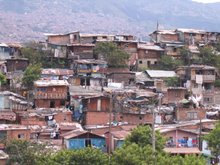
In Colombia I have been so far to Barranquilla the second biggest city of the country with around 3 million people, Cartagena a beach, colonial tourist town and Medellin another big city 14 hours from Cartagena. So far my impression is that they have greater inequality than those countries I have already visited. There are a small percentage of very rich and a bigger second tier of well off people before a lower class of unemployed and under-employed. The number of under employed is demonstrated by the millions living off selling in the streets. I think these semi-legal enterprises are even more numerous here than Mexico and make up a massive part of the economy. Now they are bringing in a new free trade agreement with the US as most countries of Central America have just signed these businesses are threatened by cheap imports and competition laws favouring multinational sellers. There are many people living in the streets in the three cities men, women and children.

The need for social reform is as clear as anywhere here with only 3% of the population having access to university and 70-80% completing primary school. Education is elite currently there are graffiti protests in Medellin about privatization of the technical college here which threatens to up costs and further limit opportunities. There is however a feel of wealth and prosperity, Christmas lights and advertisements about the new projects of the city and a very clean efficient metro system are symbolic of the people of Medellin. They have an obsession with superficial beauty while leaving the numerous homeless to excrete in the street for lack of free toilets. You can see the slum dwelling "basurera" (garbage people) from the pristine metro service that the people are so proud of. The metro itself excludes all poor people by cost and numerous police at every station. Order is maintained here by massive numbers and active presence of police and army along with a truce among drug traffickers in the city. (Formerly it was the city with the highest murder rate in the world.)

People here voted Uribe back into power recently for a large part on the basis that he aims to exterminate the guerrillas with whom the government has been fighting for the last 40 years with the help of US funding ($billions annually and the greatest recipient of US "aid" outside the middle east). The guerrilla forces begun fighting for social justice for the neglected people of the jungle under a socialist banner. They provided for these people and there own campaigning with drug money. Now most people say the war is just for who gets to export the coke, if the government succeeds in exterminating the rebel forces do you think the supply of drugs to the world will fall? Most experts on the situation don´t consider success of ending cocain availability a posibility. People are tired of the war and enjoy that now they are able to travel within and between cities with less fear of kidnappings or robbery. No doubt this is a good thing. The way it is being achieved is generally accredited to killing off the rebels and forcing them deeper into the jungle. History tells the story that this is not the way to achieve peace both here and abroad (Israel, Ireland etc.)

For now it seems that the people in need of a new government are content with the increased security. Uribe got around 60% of the vote with less than 50% participation. The movement of the left which has been going on in the jungle for over 40 years is now distant from the ideals of the poor in the cities. Some are looking to Venezuela with a socialist government making socialist reforms with envy while others think that the US support is Colombia´s way out of trouble and acting against them, as Chavez is doing, is not a way to get out of poverty.

From the hostel scene here and the few elite friends I have made here it seems that for tourists and the rich drugs are readily available and cheap. They seem equally accessible here as in other parts of Latin America I have been although here people are stopped and searched in the street more often making it more dangerous to carry them. There is someone with a machine gun in view constantly walking in the city, either police or private security. They harass the young and the homeless in the interests of security.
I´m looking forward now to a few days out of the cities somewhere on the way to Bogotá before making my way towards Venezuela.